How AI Is Changing Penetration Testing Engagements: What Buyers Should Know in 2026
AI is reshaping how pentest firms scope, test, and report — but it is also producing slicker-looking reports with less substance. What buyers should ask before signing in 2026.
The State of AI in Penetration Testing in 2026
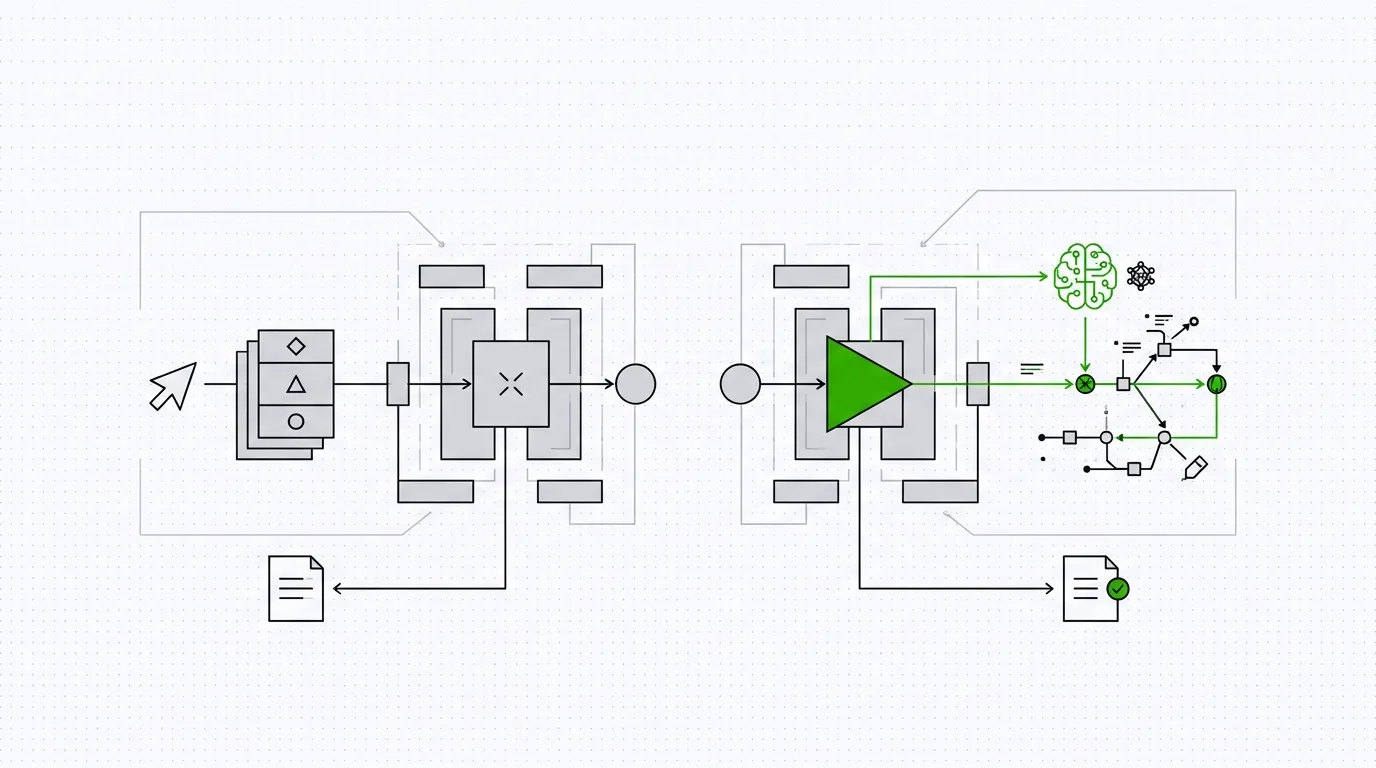
AI has changed how penetration testing companies deliver engagements. The change is real but uneven. Some companies have integrated AI tools into their workflows in meaningful ways. Others have added the term to their marketing without changing much operationally.
This article is for buyers. If you are procuring penetration testing services - whether for compliance, risk reduction, or both - you need to understand what AI actually does in this context. You also need to know what it does not do.
What AI Actually Does in a Pentest Engagement
AI shows up in penetration testing across several phases. The impact varies by phase.
Reconnaissance and Asset Discovery
This is where AI has the most mature application. AI-driven tools can process large volumes of open-source intelligence faster than a human analyst. They correlate data across multiple sources - DNS records, certificate transparency logs, code repositories, social media, leaked credential databases - and build target profiles in minutes rather than hours.
For buyers, this means the reconnaissance phase of an engagement can be shorter. A tester who previously spent a full day mapping your external attack surface may now accomplish equivalent coverage in a few hours. This is a genuine efficiency gain.
Vulnerability Identification and Prioritization
AI models trained on vulnerability databases and exploit code can identify likely attack paths faster than manual analysis. They can also prioritize findings based on exploitability and potential impact, reducing the noise that traditional scanners produce.
This is different from a vulnerability scan. A good AI-assisted system does not just list CVEs. It assesses which vulnerabilities are actually reachable and exploitable given the specific target configuration. The gap between this and a traditional automated scan is meaningful.
Exploit Chaining and Attack Path Analysis
Some companies now use AI to identify multi-step attack paths. The AI maps relationships between individual vulnerabilities and identifies chains that a tester might pursue. This is useful but limited. AI can suggest plausible chains. A human tester still needs to validate and execute them.
Business logic flaws, race conditions, and context-dependent vulnerabilities remain beyond the reliable capability of current AI tools. If a company claims their AI handles these well, ask for evidence.
Report Generation
AI is widely used for drafting penetration test reports. It can produce structured finding descriptions, risk ratings, and remediation guidance from raw testing data. This speeds up delivery.
The quality risk is real. AI-generated report content can be generic, inaccurate, or poorly tailored to the client’s environment. The best companies use AI for first drafts and have certified testers review every finding. The worst companies ship AI output with minimal review.
Report quality is one of the clearest differentiators between companies. Ask for sample reports before signing a contract, and pair that review with a broader list of questions to ask before hiring a penetration testing company.
What AI Does Not Do Well
Buyers need a clear picture of AI’s limitations to evaluate vendor claims accurately.
Business Logic Testing
AI struggles with flaws that require understanding how an application should work. Authorization bypasses, workflow manipulation, and abuse of legitimate functionality require human reasoning about business context. No AI tool in 2026 reliably handles this.
Social Engineering
AI can generate phishing emails and pretexting scripts. It cannot conduct a vishing call, read a target’s body language during physical security testing, or adapt in real time to unexpected human responses. Social engineering assessments remain fundamentally human work.
Creative and Novel Attacks
AI excels at pattern matching. It is poor at developing novel attack techniques. Red team engagements, where the goal is to simulate a determined adversary, still depend on human creativity. AI assists with efficiency but does not replace the adversarial mindset. The inverse problem — using a red team to probe an AI system itself — is a distinct discipline covered in AI red teaming: methodologies, frameworks, and tools for 2026.
Environmental Context
Every organization has unique architecture, business processes, and risk tolerances. AI tools operate on general models. A skilled tester adapts their approach based on what they learn during an engagement. This contextual adaptation is difficult to automate.
How AI Affects Pricing and Timelines
AI’s impact on pricing is nuanced. Here is a straightforward breakdown.
Where Costs May Decrease
- Routine external network assessments. AI-assisted reconnaissance and automated vulnerability validation can reduce the number of tester-days required.
- Standard web application tests. AI handles common vulnerability classes (SQLi, XSS, IDOR) efficiently, allowing testers to focus time on business logic and complex issues.
- Retesting engagements. AI can verify remediation of previously identified findings quickly.
Where Costs Stay the Same or Increase
- Red team operations. The creative, adaptive nature of red teaming limits AI’s contribution.
- Complex application testing. Applications with heavy business logic, custom protocols, or unusual architectures do not benefit much from current AI tools.
- LLM application testing. Testing applications built on top of large language models requires its own methodology, distinct from using AI tools to test conventional applications.
- Cloud and infrastructure-as-code reviews. While AI assists with configuration analysis, the complexity of multi-cloud environments still demands significant manual effort.
- Compliance-driven tests. PCI DSS, SOC 2, and similar frameworks have specific methodology requirements that may not change regardless of AI usage.
Timeline Effects
AI can compress timelines for certain engagement types. An external network pentest that took five days may now take three. A web application assessment might move from ten days to seven. These are rough estimates. Actual impact depends on scope, complexity, and how deeply the company has integrated AI into their workflow.
Faster is not always better. Compressed timelines only add value if the quality of findings remains the same. Ask vendors how they ensure quality when AI accelerates delivery.
Questions Buyers Should Ask About AI
When evaluating a penetration testing company that claims AI capabilities, these questions will separate substance from marketing.
About Methodology
- Which specific phases of your methodology use AI tools? A credible answer names specific phases and explains the role of AI in each one.
- What AI tools or models do you use? Companies with real AI integration can name their tools. Vague references to “proprietary AI” without detail are a concern.
- What percentage of findings in a typical engagement come from AI-assisted discovery versus manual testing? This helps you understand the actual contribution of AI to results.
About Quality Control
- How do you validate AI-generated findings? Every AI-identified vulnerability should be confirmed by a human tester before it appears in a report.
- What is your false positive rate for AI-assisted findings? Companies tracking this metric take quality seriously.
- Are report narratives reviewed and edited by a certified tester? AI-drafted reports need human review. No exceptions.
About Data Handling
- Does your AI tooling send client data to third-party APIs or cloud services? This matters for data privacy, especially if you operate under GDPR, HIPAA, or similar frameworks.
- Are AI models trained on client engagement data? Some tools use engagement data to improve models. You should know if your data contributes to training.
- Where is engagement data processed and stored? AI tools may introduce data residency issues that traditional testing does not.
About Transparency
- Will the report distinguish between AI-assisted and manually identified findings? This helps your internal teams assess confidence levels.
- Can you provide a methodology document that specifies AI involvement? Written methodology documentation is a sign of operational maturity.
Distinguishing Meaningful AI Integration from Hype
The penetration testing market has an incentive to overstate AI capabilities. Here is how to evaluate claims.
Signs of Genuine AI Integration
- The company can explain specifically how AI improves each phase of their methodology.
- They acknowledge limitations and clearly state what AI does not handle.
- They have measurable data on how AI has affected engagement quality, such as false positive rates or finding counts.
- Their testers hold relevant certifications (OSCP, CREST, GXPN) in addition to using AI tools. AI augments skilled testers; it does not replace the need for skilled testers.
- They have written methodology documentation that addresses AI tool usage.
Red Flags
- Vague claims about AI without operational specifics.
- Positioning AI as a replacement for human testers rather than an augmentation.
- Pricing that seems too low for the scope. This may indicate over-reliance on automated tools without adequate manual testing.
- Unwillingness to share sample reports.
- No certifications or accreditations among their testing staff.
- Claims that AI eliminates false positives entirely. It does not.
These signals overlap with broader red flags to watch for when hiring any penetration testing firm — treat AI marketing as one strand of a larger evaluation, not a separate exercise.
AI-Augmented vs. Fully Automated Testing
These are different services. Buyers should understand the distinction.
Fully automated testing uses scanners and AI tools to identify vulnerabilities with minimal human involvement. This is useful for continuous monitoring, CI/CD pipeline integration, and frequent baseline assessments. It is not a penetration test. It is closer to an advanced vulnerability assessment.
AI-augmented penetration testing uses AI tools to assist human testers during a structured engagement. The human tester drives the assessment, uses AI for efficiency, and applies judgment throughout. This is a penetration test.
If a company offers an “AI pentest” at a price point that seems too low, they may be selling automated scanning under a different name. Ask about the number of tester-hours included in the engagement. Ask whether a human tester will actively test your environment.
The difference matters for compliance. Many frameworks require manual penetration testing, not automated scanning. A fully automated test may not satisfy PCI DSS Requirement 11.4 or similar mandates.
How to Evaluate AI-Capable Pentest Companies
When searching for a penetration testing provider, you can use the pentest.fyi directory to find and compare companies based on their services, certifications, and specializations. Here is a practical evaluation framework for assessing AI-related capabilities.
Step 1: Define Your Requirements
Before evaluating vendors, decide what you need and what is in scope.
- Is this engagement compliance-driven or risk-driven?
- What is the target scope - external network, web applications, internal infrastructure, cloud?
- Do you have specific requirements around data handling or testing methodology?
- Is timeline a primary concern?
Step 2: Request Detailed Proposals
Ask each company for a proposal that addresses:
- The number of tester-days and tester-hours allocated.
- Which phases will use AI-assisted tooling.
- What manual testing is included.
- How quality is assured for AI-assisted findings.
- Certifications of the assigned testers.
- A sample report.
Step 3: Compare Apples to Apples
Not all proposals describe the same service. Use a comparison table.
| Evaluation Criteria | Company A | Company B | Company C |
|---|---|---|---|
| Tester-days allocated | |||
| AI usage disclosed | |||
| Manual testing hours specified | |||
| Tester certifications listed | |||
| Sample report provided | |||
| False positive rate reported | |||
| Data handling policy clear | |||
| Methodology documentation available |
Step 4: Check References and Listings
Search for the companies on pentest.fyi to review their listings, service areas, and certifications. Look for companies with relevant industry experience and appropriate accreditations.
Contractual Considerations for AI-Augmented Engagements
Your statement of work and master services agreement should address AI-specific issues.
- AI tool disclosure. Require the vendor to list all AI tools used during the engagement.
- Data processing addendum. If AI tools process data through third-party services, ensure this is covered by appropriate data processing agreements.
- Human review requirement. Specify that all findings and report content must be reviewed by a certified human tester.
- Retesting scope. If AI tools identify a high volume of findings, clarify how retesting will be handled and billed.
- Intellectual property. Clarify ownership of custom scripts, exploits, or tooling developed during the engagement, including any AI-generated code.
What to Expect Going Forward
AI’s role in penetration testing will continue to grow. Here is what buyers can reasonably expect over the next 12 to 24 months.
- More companies will integrate AI into reconnaissance and vulnerability identification. This will become standard rather than a differentiator.
- Report quality will improve as AI drafting tools mature, but human review will remain necessary.
- Pricing for routine assessments may decrease modestly as AI improves efficiency.
- Complex engagements - red teaming, application security testing with heavy business logic, IoT and OT testing - will remain labor-intensive.
- Regulatory and compliance frameworks will begin addressing AI’s role in security testing more explicitly.
The companies that use AI well will be the ones that already had strong methodology and skilled testers. AI makes good testers more efficient. It does not make bad testers good.
Summary
AI is a meaningful development in penetration testing. It is not a transformation of what testing fundamentally requires. Skilled humans remain essential.
As a buyer, your job is to ask the right questions, demand specifics, and avoid paying a premium for marketing. Use resources like the pentest.fyi directory to find companies, compare their capabilities, and make informed procurement decisions.
The best penetration testing engagement is the one that actually finds the vulnerabilities that matter to your organization. Whether AI helped find them is secondary. Whether they were found at all is what counts.
Key Takeaways
- AI is changing how penetration testing companies deliver engagements, but it has not replaced the need for skilled human testers.
- Buyers should ask specific questions about how AI is used in each phase of a pentest engagement and what human oversight is in place.
- AI-augmented pentests can reduce timelines and lower costs for routine assessments, but complex engagements still require significant manual effort.
- Report quality varies widely between companies using AI for generation; buyers should demand sample reports and ask about human review processes.
- The distinction between AI-assisted and fully automated testing matters - they are different services with different risk profiles and different value.
Frequently Asked Questions (FAQ)
Does AI-augmented penetration testing cost less than traditional manual testing?
It depends on the engagement type. For routine network and web application assessments, AI augmentation can reduce costs by shortening the time required for reconnaissance and initial exploitation. Complex engagements like red team operations or tests requiring significant business logic analysis typically do not see meaningful cost reductions.
Can AI fully replace human penetration testers?
No. AI handles pattern recognition, automated scanning, and report drafting well. It struggles with business logic flaws, creative attack chaining, social engineering, and understanding organizational context. Skilled human testers remain essential for meaningful security assessments.
What questions should I ask a penetration testing vendor about their AI usage?
Ask which specific phases use AI, what human oversight exists for AI-generated findings, whether AI-generated report content is reviewed by a certified tester, and how they validate that AI tools do not produce false positives that inflate results.
How do I tell the difference between real AI integration and marketing hype?
Ask for specifics. Companies with genuine AI integration can explain exactly which tools they use, how AI fits into their methodology, and what limitations exist. Vague claims about AI without specific operational details are a red flag.
Should I require that my penetration testing provider disclose AI tool usage?
Yes. You should know what tools - AI or otherwise - are used during your engagement. This affects reproducibility, liability, and your ability to evaluate whether findings are reliable. Include AI disclosure requirements in your statement of work.