AI Red Teaming Explained: Methodologies, Frameworks & Tools for 2026
AI red teaming is adversarial testing of AI systems for safety, security, and reliability failures that traditional pentesting does not cover. A practical look at the methodologies, frameworks, and tools that define a credible engagement in 2026.
What Is AI Red Teaming?
AI red teaming is the practice of systematically probing AI systems through adversarial testing to identify safety, security, and reliability failures before they reach production or cause harm. It borrows the adversarial mindset from traditional red teaming but applies it to risks unique to AI: prompt injection, hallucination, data leakage, bias, and the unpredictable behavior of non-deterministic models.
AI red teaming goes beyond conventional vulnerability scanning. It tests the model itself, the application layer built around it, the data pipeline feeding it, and the guardrails meant to constrain it.
AI Red Teaming vs Traditional Red Teaming vs AI Penetration Testing
These terms overlap but are not interchangeable. The table below draws clear lines.
| Dimension | Traditional Red Teaming | AI Penetration Testing | AI Red Teaming |
|---|---|---|---|
| Target | Networks, applications, people | AI/ML model endpoints and APIs | Full AI system: model, data, guardrails, agents |
| Goal | Breach objectives, test detection | Find technical vulnerabilities | Find safety, security, and reliability failures |
| Scope | Infrastructure and human factors | Model-layer attack surface | Broad: includes bias, misuse, hallucination, business logic |
| Approach | Scenario-driven, objective-based | Structured vulnerability testing | Adversarial simulation with iterative break/fix |
| Output | Attack narrative, detection gaps | Vulnerability report with CVSS | Risk findings across safety, security, and fairness |
| Determinism | Mostly deterministic targets | Semi-deterministic | Non-deterministic; requires statistical validation |
| Frameworks | MITRE ATT&CK, PTES, TIBER-EU | OWASP, PTES | NIST AI RMF, MITRE ATLAS, OWASP LLM Top 10 |
Traditional pentesters test whether an attacker can get in. AI red teamers test whether the AI can be made to behave in ways its builders did not intend.
Why AI Red Teaming Matters Now
Three forces are converging to make AI red teaming a requirement rather than an aspiration.
Non-Determinism Changes the Testing Model
LLMs produce different outputs for the same input. A prompt injection that fails on Monday may succeed on Thursday. This means binary pass/fail testing is insufficient. AI red teams must run attacks repeatedly, measure success rates statistically, and account for temperature, context windows, and model updates.
RAG and Agentic Architectures Expand the Attack Surface
Retrieval-augmented generation (RAG) pipelines connect models to live data sources. Agentic systems grant models the ability to take actions: send emails, query databases, execute code. Each integration point creates new attack surface. A prompt injection in a RAG system can exfiltrate documents the model was never meant to expose. An agentic system with poor authorization can be tricked into performing privileged operations.
The attack surface is no longer just the model. It is the entire chain of tools, data sources, and permissions the model can access.
Regulatory Drivers Are Real
Regulators are not waiting. Several frameworks now reference or require adversarial testing of AI systems:
- NIST AI Risk Management Framework (AI RMF): The NIST AI RMF explicitly calls for red teaming as part of the “Test” function within its Measure category. NIST released companion guidance (NIST AI 600-1) specifically addressing generative AI risks.
- EU AI Act: High-risk AI systems require conformity assessments. Adversarial testing is a practical way to demonstrate robustness and safety compliance.
- Executive Order 14110 (US): The October 2023 executive order directed NIST to develop red teaming guidelines for generative AI. Those guidelines now inform federal procurement.
Organizations deploying AI in regulated sectors - finance, healthcare, government - face growing pressure to demonstrate they have tested these systems adversarially.
The AI Red Teaming Process
A structured AI red team engagement follows four phases. The process is iterative, not linear.
1. Threat Modeling
Identify what the AI system does, what data it accesses, what actions it can take, and who interacts with it. Map threat actors: external attackers, malicious users, insider threats, and indirect prompt injection via third-party content.
Define abuse scenarios specific to the system. A customer-support chatbot has different risks than an autonomous coding agent. Prioritize scenarios by impact and likelihood.
2. Adversarial Simulation
Design attacks that exercise the threat model. This includes:
- Prompt injection: Direct and indirect injection to override system instructions.
- Jailbreak attempts: Multi-step techniques to bypass content filters and safety guardrails.
- Data extraction: Probing the model for training data, system prompts, or connected data sources.
- Privilege escalation: Tricking agentic systems into performing actions beyond intended scope.
- Bias and fairness testing: Adversarial inputs designed to elicit discriminatory or harmful outputs.
Attacks should reflect real-world attacker behavior, not just academic proofs of concept.
3. Adversarial Testing and Documentation
Execute attacks systematically. Record inputs, outputs, success rates, and environmental conditions. Because LLMs are non-deterministic, run each attack multiple times and report results statistically.
Classify findings by risk category: safety, security, fairness, reliability. Rate severity using a consistent framework. The OWASP Top 10 for LLM Applications provides a useful taxonomy for classification.
4. Break/Fix Loop
Share findings with the development team. Implement mitigations: improved system prompts, input validation, output filtering, guardrail tuning, or architectural changes. Then retest.
This loop continues until risk is reduced to an acceptable level. AI red teaming is not a one-time activity. Model updates, new integrations, and evolving attack techniques mean regular retesting is necessary.
Common Vulnerabilities Uncovered
AI red teams consistently find the same categories of failures across different systems and industries.
- Prompt injection: The most common finding. Attackers override system instructions via user input or injected content in retrieved documents. Both direct injection (user-supplied) and indirect injection (embedded in data sources) are in scope.
- Jailbreaks: Techniques that bypass safety filters. These range from simple role-playing prompts to complex multi-turn manipulation chains. Jailbreak techniques evolve rapidly.
- PII and data leakage: Models that memorize training data or have access to sensitive data sources can be coaxed into revealing personal information, API keys, or confidential documents.
- Hallucination weaponization: Attackers can steer models into generating fabricated citations, fake legal precedents, or false medical information. In agentic systems, hallucinated tool calls can trigger real-world actions.
- Business-logic abuse on agents: Agentic systems that can book meetings, process refunds, or modify records can be manipulated to perform unauthorized transactions through carefully crafted interactions.
- Model theft and extraction: Repeated queries can extract model weights, fine-tuning data, or enough behavioral information to replicate a proprietary model.
Frameworks and Resources
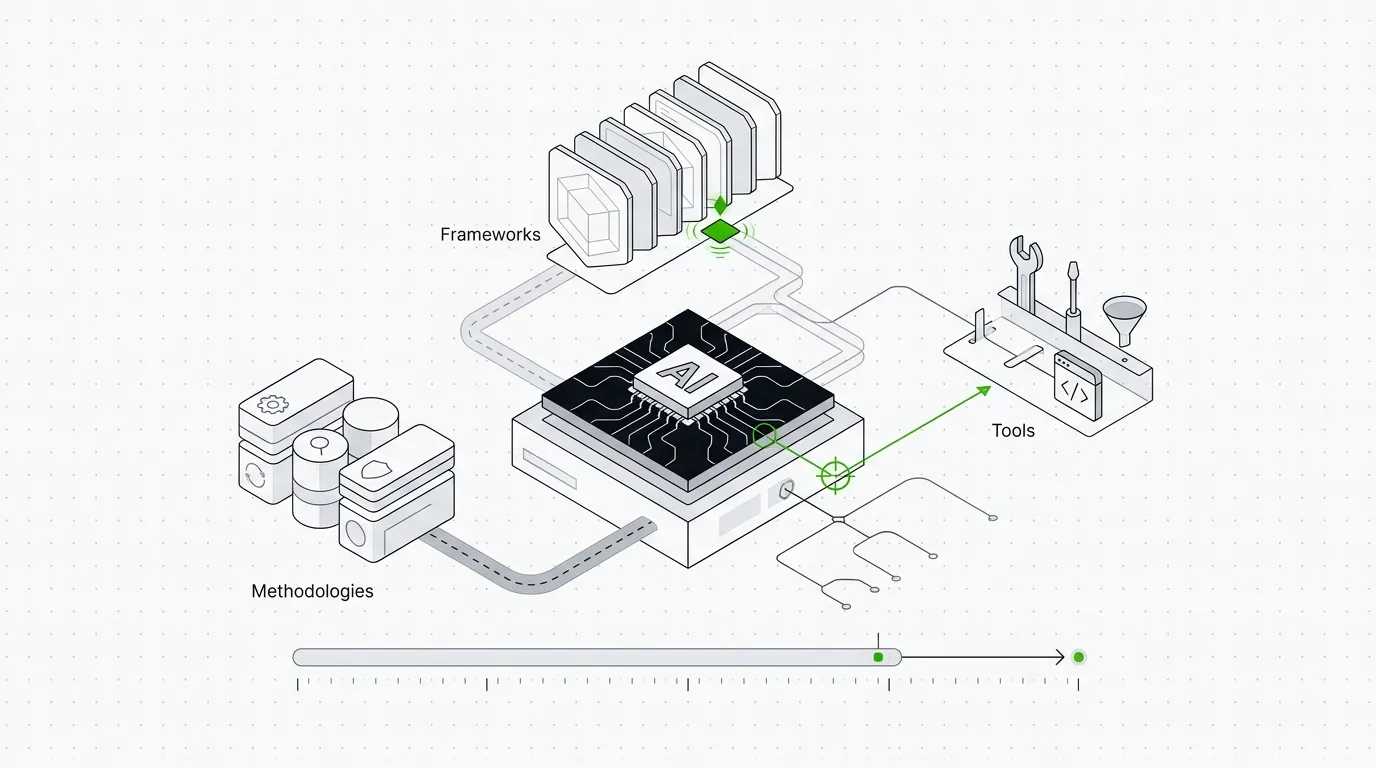
Four frameworks form the foundation for structured AI red teaming.
NIST AI RMF
The NIST AI Risk Management Framework provides a governance structure for managing AI risk across the lifecycle. Its Map, Measure, Manage, and Govern functions provide a top-level structure for any AI red team program. NIST AI 600-1 adds specific guidance for generative AI.
OWASP Top 10 for LLM Applications
The OWASP Top 10 for LLM Applications catalogs the most critical risks in LLM-powered applications. It covers prompt injection, insecure output handling, training data poisoning, model denial of service, supply chain vulnerabilities, and more. It serves as a practical checklist for scoping red team engagements.
MITRE ATLAS
MITRE ATLAS (Adversarial Threat Landscape for AI Systems) is a knowledge base of adversarial tactics, techniques, and case studies for ML systems. It mirrors the structure of MITRE ATT&CK, making it familiar to security teams. ATLAS maps real-world attack techniques to observable behaviors, which helps red teams build realistic attack scenarios.
Microsoft AI Red Team
Microsoft has published detailed documentation on how its internal AI red team operates. Their approach combines security experts, ML engineers, and domain specialists. Microsoft’s publications are among the most detailed public accounts of how a large organization structures AI red teaming at scale.
AI Red Teaming Tools
The tooling landscape is maturing. Several open-source and commercial options are available.
Open-Source Tools
- Microsoft PyRIT (Python Risk Identification Toolkit): An open-source framework for automating AI red teaming. PyRIT orchestrates multi-turn attacks, supports multiple model endpoints, and logs results for analysis. It is well-documented and actively maintained.
- Garak: A vulnerability scanner for LLMs. Garak runs predefined probes against model endpoints to detect known vulnerability classes like prompt injection, data leakage, and hallucination. Think of it as Nmap for LLMs.
- Promptfoo: A testing and evaluation framework that supports red teaming use cases. Promptfoo lets you define adversarial test suites, run them against multiple models, and compare results. It integrates well into CI/CD pipelines.
- Giskard: Focuses on testing ML models for bias, hallucination, and robustness. Giskard provides both automated scanning and manual testing capabilities.
Training and Labs
- Hack The Box AI Red Team Labs: Hands-on labs for practicing AI red teaming techniques in a controlled environment.
- Bugcrowd AI Red Teaming: Crowdsourced AI red teaming that combines automated scanning with human testers.
For a deeper look at tool selection and configuration, see our guide to AI red teaming tools (coming soon).
In-House vs Specialist Firms
The decision to build an internal AI red team or hire externally depends on your AI maturity, budget, and compliance requirements.
Building In-House
An internal AI red team offers continuous coverage and deep knowledge of your systems. It requires staff who combine ML/AI expertise with offensive security skills. This combination is rare and expensive. In-house teams also risk developing blind spots over time.
In-house teams work best when you have a large AI deployment, frequent model updates, and the budget to hire and retain specialized talent.
Hiring Specialist Firms
Several firms offer dedicated AI red teaming services:
- Trail of Bits: Deep technical expertise in ML security and adversarial testing.
- Bishop Fox: Offers AI and LLM penetration testing as part of their offensive security practice.
- HackerOne: Provides AI red teaming through their researcher community.
- Bugcrowd: Crowdsourced AI red teaming programs.
- NCC Group: AI assurance services including adversarial testing.
External firms bring fresh perspectives, cross-industry experience, and established methodologies. They are a good fit for point-in-time assessments, compliance-driven engagements, or organizations with limited AI security headcount.
You can search for companies that offer AI-specific penetration testing and red teaming services on pentest.fyi. Filter by service type, region, and certifications to build a shortlist.
The Hybrid Approach
Many organizations combine both. An internal team handles continuous monitoring and testing of model updates. External specialists conduct periodic deep-dive assessments and provide independent validation for compliance purposes.
How to Start an AI Red Team Program
A four-step plan to get from zero to operational.
Step 1: Inventory Your AI Assets
Document every AI system in production or development. Record the model type, data sources, integrations, user-facing interfaces, and permissions. You cannot red team what you have not inventoried.
Step 2: Assess Risk and Prioritize
Apply the NIST AI RMF Map function. Identify which systems pose the highest risk based on data sensitivity, autonomy level, and user exposure. A public-facing chatbot with access to customer records is higher priority than an internal summarization tool with no data access.
Step 3: Define Scope and Select Methods
For each priority system, define the red team scope. Choose the appropriate frameworks: OWASP Top 10 for LLMs for application-layer risks, MITRE ATLAS for adversarial tactics, NIST AI RMF for governance alignment. Decide whether to test in-house, hire externally, or both.
Select tools appropriate to the engagement. PyRIT and Garak cover automated scanning. Manual testing is needed for complex agentic workflows and business-logic abuse.
Step 4: Execute, Report, and Iterate
Run the engagement. Document findings with reproducible attack chains, statistical success rates, and severity ratings. Present results to stakeholders with clear remediation guidance. Schedule retesting after fixes are implemented.
Establish a cadence. Quarterly assessments are a reasonable starting point. Increase frequency if you ship model updates often or operate in a regulated industry.
Finding AI Red Teaming Providers
The market for AI red teaming services is growing but still fragmented. Certifications like OSCP or CREST indicate general offensive security competence but do not guarantee AI-specific expertise. Look for firms that can demonstrate:
- Published research in ML/AI security
- Familiarity with NIST AI RMF and OWASP LLM Top 10
- Experience with your AI stack (e.g., Azure OpenAI, AWS Bedrock, self-hosted models)
- A structured methodology, not just ad hoc prompt fuzzing
pentest.fyi maintains a free directory of penetration testing companies worldwide. You can filter listings by specialization to find firms with AI and LLM security capabilities. Company listings include service details, certifications, and geographic coverage to help you compare options efficiently.
Conclusion
AI red teaming is the discipline of testing AI systems the way attackers will use them. The tools, frameworks, and specialist firms exist today. Regulatory and business pressure makes this work urgent.
Start by inventorying your AI systems. Prioritize by risk. Pick a framework. Test adversarially. Fix what breaks. Repeat.
The systems you are deploying do not behave like traditional software. Your testing program should reflect that.